
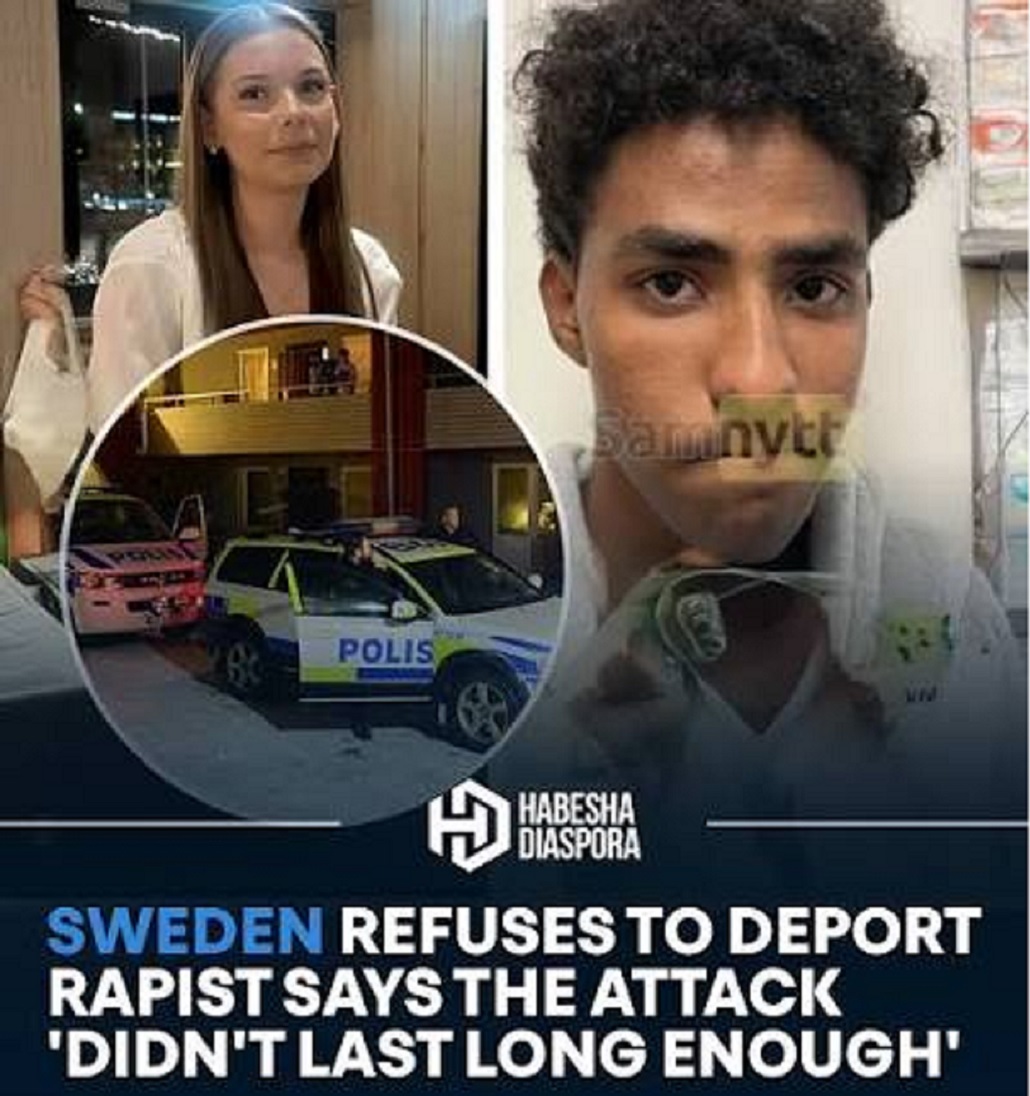
According to reports, A Swedish court ruled that Yazied Mohamed, an 18-year-old Eritrean migrant convicted of raping 16-year-old Meya Åberg, won’t be deported. Mohamed was sentenced to three years in prison, but because he has refugee status, deportation requires an “exceptionally serious offense.” The court said the rape, which occurred last September while Meya was walking home from work, wasn’t deemed serious enough, citing its duration as a factor.
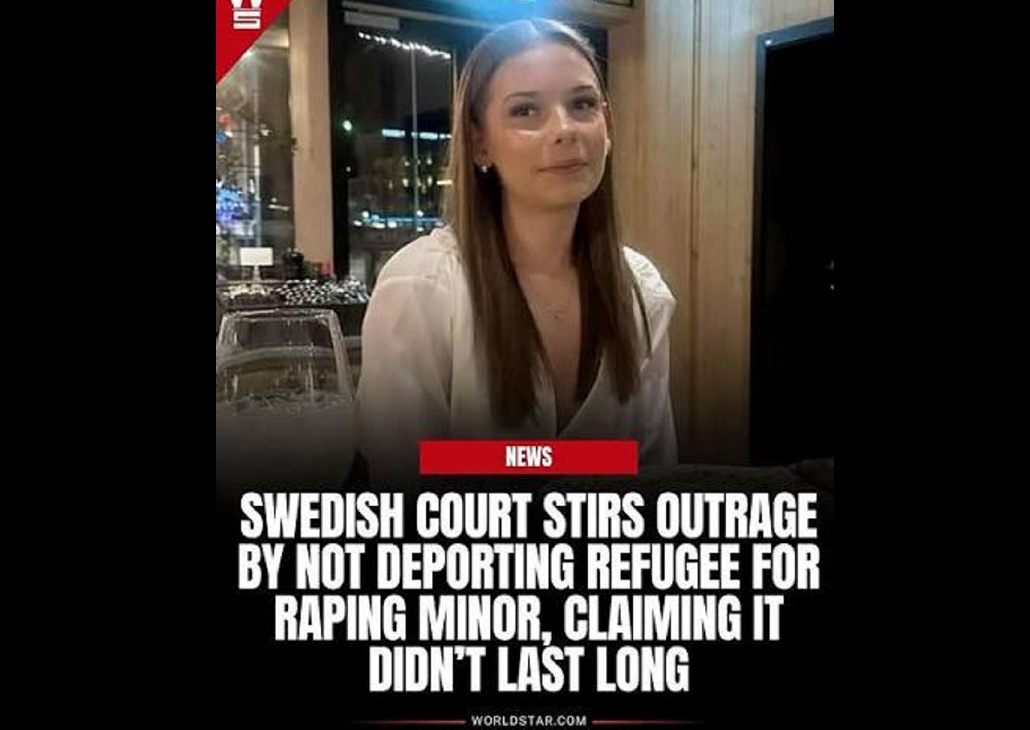
A Swedish court has ruled that an 18-year-old Eritrean migrant, Yazied Mohamed, who raped 16-year-old Meya Åberg, will not be deported, stating the assault “wasn’t long enough” to qualify as an “exceptionally serious offense.”
The incident took place on September 1st, 2024, when Meya was walking home after missing her bus following a late shift at McDonald’s. She and her family immediately reported the case to police.
The incident took place on September 1st, 2024, when Meya was walking home after missing her bus following a late shift at McDonald’s. She and her family immediately reported the case to police.

Mohamed was sentenced to 3 years in prison for rape. Prosecutors had requested deportation, but the Court of Appeal for Upper Norrland rejected the request, noting that Mohamed holds refugee status and that Swedish law only allows deportation if the crime poses a “serious threat to public order and safety.”
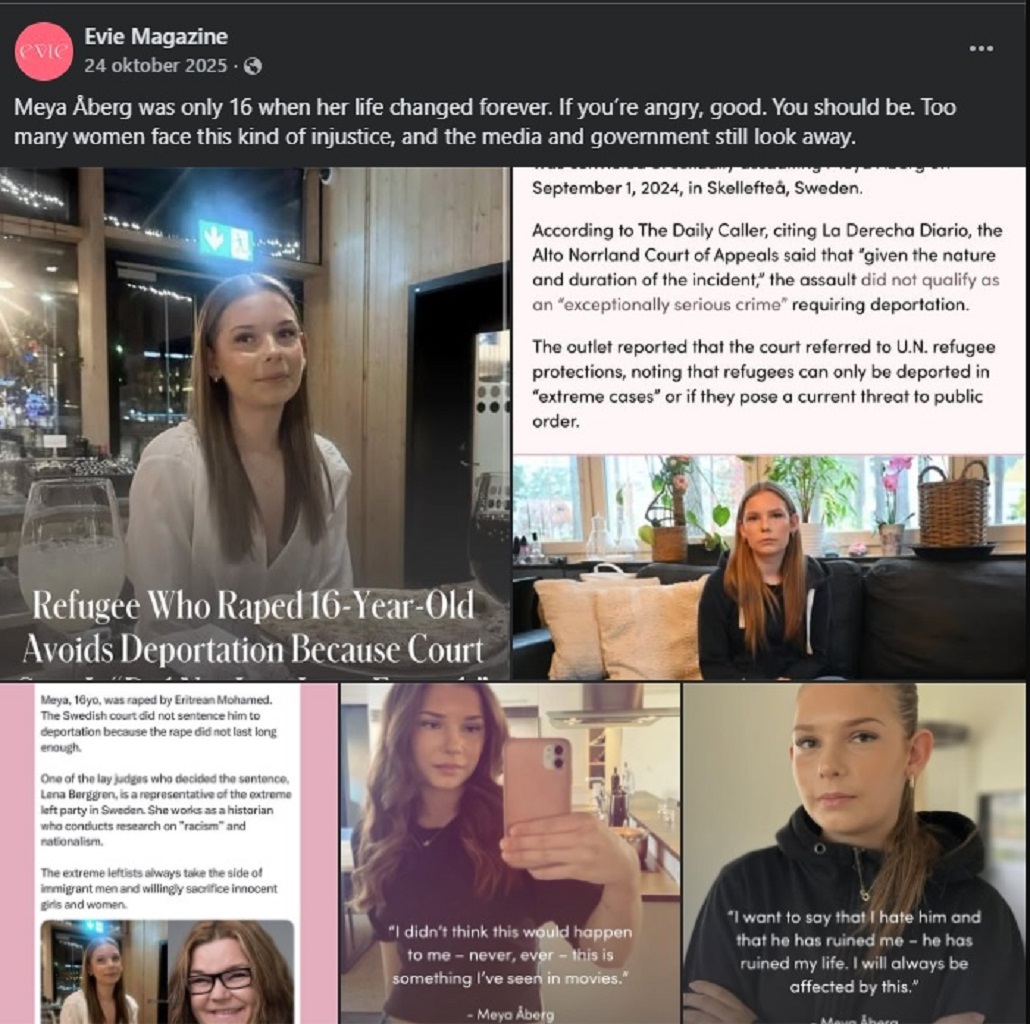
The court stated:
“Given the nature and duration of the offense, the crime is serious, but not exceptionally serious to warrant deportation.
The verdict has sparked widespread debate across Sweden over the country’s deportation laws and refugee protections
“Given the nature and duration of the offense, the crime is serious, but not exceptionally serious to warrant deportation.
The verdict has sparked widespread debate across Sweden over the country’s deportation laws and refugee protections
Source: Court of Appeal for Upper Norrland
UPDATE;
Yes, the UN Refugee Agency (UNHCR) has updated its guidelines regarding the interpretation of the Refugee Convention following the internationally publicized rape of 16-year-old Meya Åberg in Skellefteå, Sweden.
The key changes introduced by the updated framework include:
Easier deportation of violent offenders: The revised guidelines explicitly clarify that rape constitutes a particularly serious crime. This makes it significantly easier for states to revoke refugee status and deport individuals convicted of such violent acts.
Removal of the lenient “duration” assessment: Previously, Swedish courts heavily restricted deportations by evaluating if a crime was “exceptionally serious,” sometimes factoring in how long the assault lasted. The Swedish Court of Appeal drew widespread outrage when it denied the deportation of the perpetrator, Yazied Mohamed, citing the “short duration” of the assault. The new guidelines close these loopholes.
Historic policy shift: This decision—officially published by the UNHCR on August 21, 2026—marks the first time these global guidelines have been updated in nearly 30 years.
Swedish diplomatic pressure: The policy shift follows intense lobbying from Swedish Migration Minister Johan Forssell, who initiated a direct dialogue with the UN to ensure old international conventions better protect crime victims rather than perpetrators.